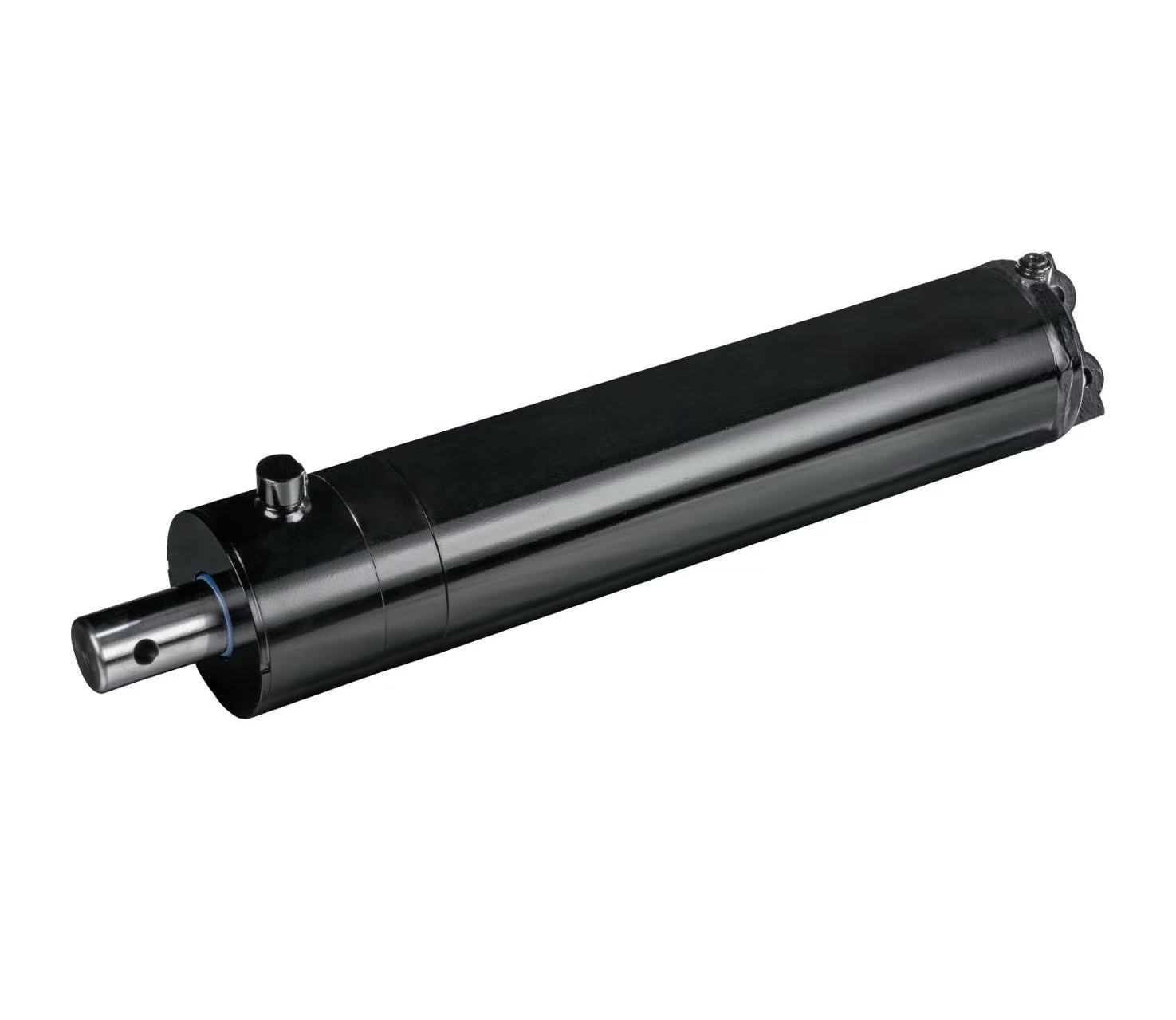
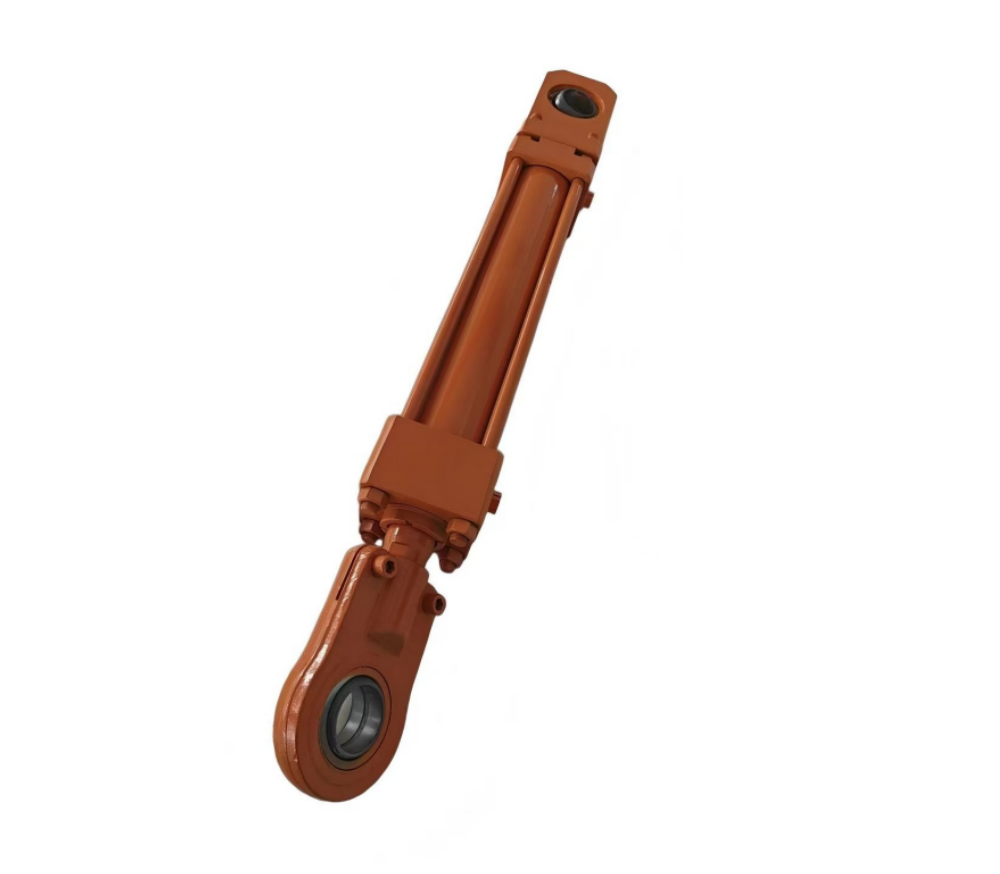
Hydraulic cylinders are essential components in fluid power systems, converting hydraulic energy into linear mechanical motion. Whether in construction equipment, industrial machinery, agricultural systems, or mobile hydraulics, selecting the right cylinder type is critical for performance, reliability, and cost efficiency. Two of the most common designs are single-acting and double-acting hydraulic cylinders, and while they share a basic functional principle, there are important differences in how they work and when each type should be used.
Single-Acting Hydraulic Cylinder
A single-acting hydraulic cylinder is a simple type of actuator where hydraulic pressure is applied in only one direction, typically to extend the cylinder. A spring, gravity, or an external load provides the force to return the piston to its original position. In other words, it has one hydraulic port and relies on non-hydraulic force for the return stroke.
How it Works?
When pressurized hydraulic fluid enters the cylinder, it pushes the piston and rod outward, performing work such as lifting, pushing, or lowering a load. Once fluid pressure is relieved, the return force (such as a spring or gravity) pulls the piston back into the cylinder. This simplicity makes single-acting cylinders reliable and cost-effective for many applications that don’t require controlled motion in both directions.
Advantages
1. Simplicity and Cost-Effectiveness
With fewer parts and a basic design, single-acting cylinders are easier to maintain and generally less expensive to manufacture and repair.
2. Ideal for One-Way Loads
If the application primarily requires force in one direction and a simple method (like gravity) can handle the return, a single-acting cylinder is often ideal. For example, in hydraulic jacks, simple lifting devices, and dump bodies.
3. Compact Return Mechanism
Because the return force is provided externally, these cylinders can be compact and lightweight for certain applications.
Limitations
Limited control on the return stroke, making it unsuitable for applications where controlled retraction is required.
Return speed varies depending on external force like gravity or spring tension.
Common Applications
Double-Acting Hydraulic Cylinder
A double-acting hydraulic cylinder, in contrast, uses hydraulic pressure in both directions to control extension and retraction. It has two ports, one at each end of the cylinder, allowing fluid to be directed to either side of the piston.
How it Works?
When fluid pressure is applied to the cap end of the cylinder, the piston extends and the rod pushes outward. Conversely, when fluid is directed to the rod end, it forces the piston back in, retracting the rod. Because hydraulic fluid powers both strokes, motion can be precisely controlled in either direction under load.
Advantages
1. Full Control in Both Directions
The greatest advantage of double-acting cylinders is precise control of motion in both extension and retraction. This is essential when a return movement must also carry load or be regulated at specific speeds.
2. More Versatile Applications
Double-acting cylinders are commonly used in industrial automation, heavy equipment steering systems, presses, machine tools, and anywhere bidirectional powered motion is required.
3. Faster Cycle Times and Higher Productivity
Because hydraulic fluid manages both strokes, double-acting cylinders can operate faster and more efficiently in continuous motion applications.
Limitations
Higher cost and complexity, due to additional seals and components.
More maintenance required, since both sides of the piston are exposed to hydraulic fluid.
Common Applications
Industrial automation equipment
Heavy machinery steering cylinders
Hydraulic presses
Construction machinery requiring controlled bidirectional motion
Key Differences
| Feature | Single-Acting Cylinder | Double-Acting Cylinder |
| Hydraulic Ports | Single port | Two ports |
| Direction Powered by Hydraulic Pressure | One direction | Both extension and retraction |
| Return Method | Spring, gravity or external force | Hydraulic fluid |
| Control Over Motion | Limited control on return stroke | Full control in both directions |
| Complexity | Simple design | More complex |
| Cost | Generally lower | Generally higher |
| Installation Space | May require external return space | More compact and controlled return |
| Typical Use Cases | Lifting, dumping, low-force return | Precision motion, industrial machines |
This table highlights the functional contrasts that affect performance, cost, and application suitability.
Which One Should You Choose?
The choice between these two types of hydraulic cylinders depends on application requirements:
Choose Single-Acting Hydraulic Cylinders If:
The load only needs to move in one direction.
Gravity or spring force can reliably perform the return stroke.
Cost and simplicity are priorities.
Choose Double-Acting Hydraulic Cylinders If:
Motion must be controlled in both directions.
The cylinder must push and pull under load.
Precision, speed, and repeatability are critical.
While both single-acting and double-acting hydraulic cylinders perform the basic function of converting hydraulic energy into linear motion, they differ significantly in design, operation, cost, and control. Single-acting cylinders are simple and cost-effective for one-direction loads, while double-acting cylinders offer full bidirectional control and versatility for demanding applications.
Choosing between them requires understanding the mechanical demands of your system, expected load behavior, return motion requirements, and budget constraints. With the right selection, hydraulic cylinders can deliver reliable performance, long life, and efficient operation in almost any hydraulic system.