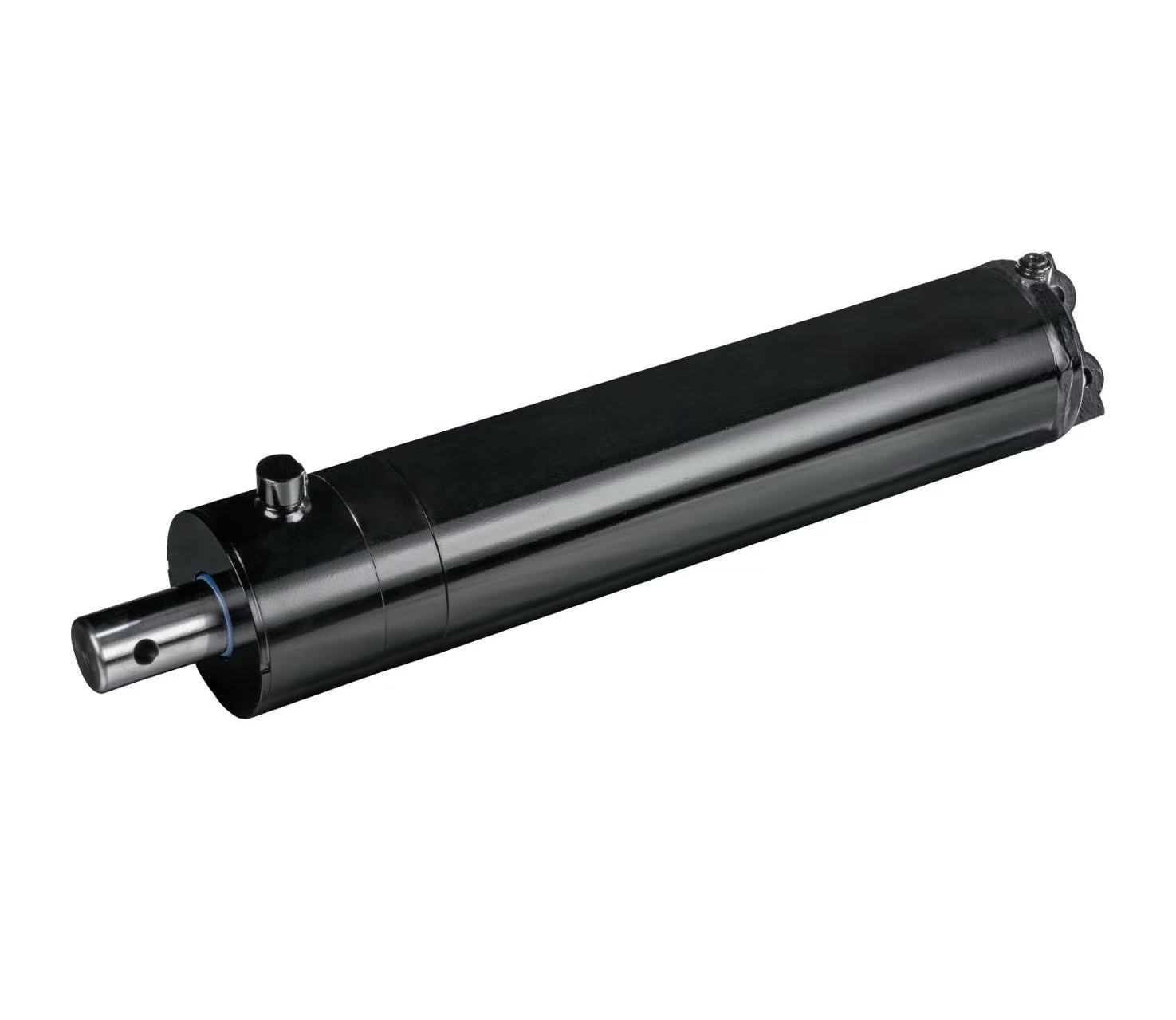
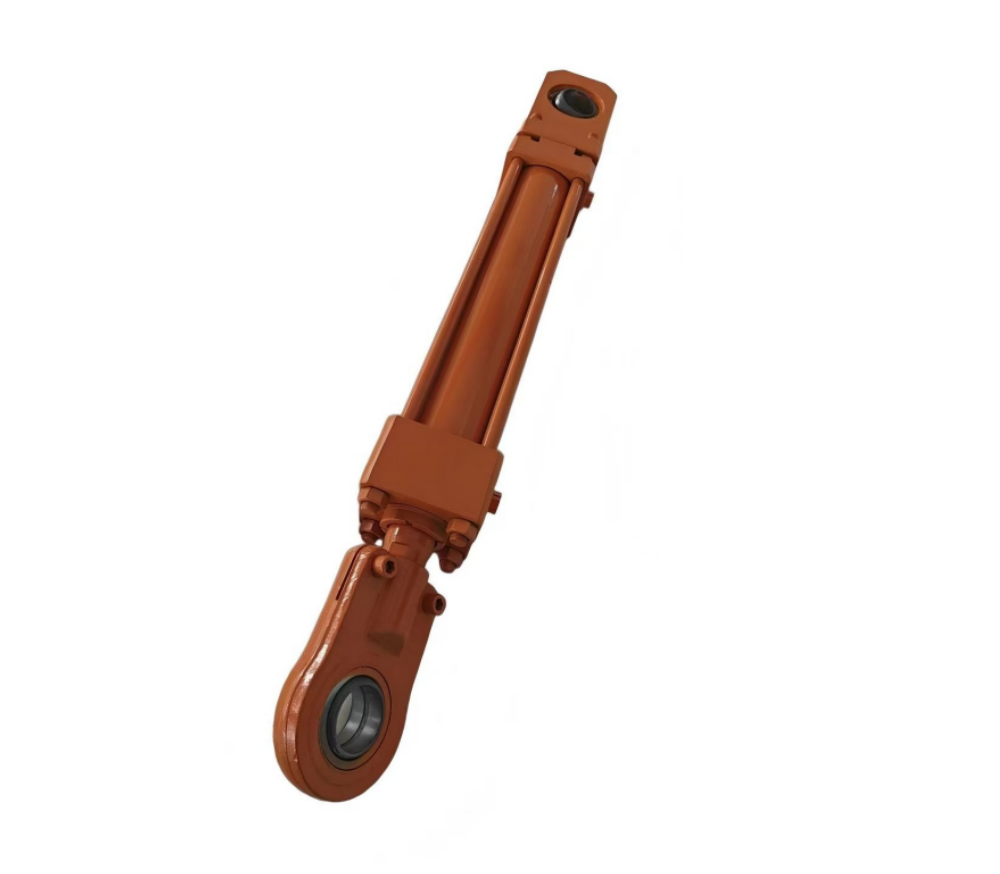
A tie rod hydraulic cylinder gets its name from the four or more threaded steel rods that run the length of the cylinder tube, holding the end caps in place. These tie rods provide structural support and prevent the cylinder from coming apart under pressure. It is a type of linear actuator held together by four or more high-strength threaded steel rods that run parallel to the cylinder barrel, securing the end caps and allowing easy disassembly for maintenance and repair.
How Tie Rod Cylinders Work?
The basic operation is straightforward. The cylinder barrel is filled with hydraulic fluid, typically oil, and has ports for fluid inlet and outlet. When hydraulic pressure is applied to the inlet port, it pushes the piston, which is connected to the piston rod, in one direction, creating linear motion. The hydraulic fluid is then released through the outlet port, allowing the piston to return to its original position .
What makes tie rod cylinders unique is their construction. Unlike welded cylinders where the end caps are permanently welded to the barrel, tie rod cylinders use removable tie rods that can be unbolted with standard wrenches. This means the entire cylinder can be disassembled, serviced, and reassembled in the field without special tools.
Top Industrial Applications for Hydraulic Tie Rod Cylinders
Tie rod cylinders are widely used across multiple industries where linear force and motion are required. Here are the primary application areas.
Industrial Machinery
This is the most common application area. Tie rod cylinders are used in presses, injection molding machines, metalworking equipment, and machine tools. They provide the necessary force to move heavy loads, control tool movement, and perform precise operations . Bosch Rexroth specifically lists applications including iron and steel manufacturing, foundry machinery, automotive operations, and presses.
Plastics and Rubber Processing
Plastics molding equipment and rubber processing machinery rely heavily on tie rod cylinders. The ability to easily disassemble and service these cylinders is a major advantage in production environments where downtime is expensive.
Material Handling and Packaging
Packaging equipment, material handling systems, and conveyor positioning devices frequently use tie rod cylinders for their reliability and ease of maintenance.
Construction and Agricultural Equipment
While welded hydraulic cylinders are more common in mobile applications, tie rod cylinders still find use in construction and agricultural machinery such as tractors, harvesters, and light construction equipment. They perform tasks like lifting and lowering implements, steering, and controlling attachment movements.
Other Applications
Additional applications include wood and paper production equipment, civil engineering systems, die-casting molds, and precision automation equipment.
7 Advantages of Tie Rod Cylinders
Tie rod cylinders offer several distinct benefits that make them the preferred choice for many industrial applications.
1. Easy Serviceability and Maintenance
The most significant advantage is how easy they are to repair. Because the end caps are held by threaded rods, you can disassemble the entire cylinder with standard wrenches. This means seal replacements and internal inspections can be done in the field without special equipment.
2. NFPA Interchangeability
NFPA standardization means tie rod cylinders from different manufacturers share common mounting dimensions. If a cylinder fails, you can replace it with any NFPA-compliant cylinder from any brand without modifying your equipment.
3. Wide Range of Mounting Options
Tie rod cylinders are available in numerous mounting styles. The R series offers 19 different mounting configurations, including flange mounts, clevis mounts, side lug mounts, and trunnion mounts.
4. Cost-Effective for Industrial Use
Because they are manufactured as standard products in high volumes, tie rod cylinders are generally less expensive than custom welded cylinders. This makes them economical for OEM applications and replacement markets.
5. Straight-Line Force Transfer
Properly mounted tie rod cylinders provide excellent straight-line force transfer. Mounting styles like extended tie rods, flange mounts, and centerline lug mounts allow the thrust or tension forces to be distributed uniformly about the cylinder centerline, minimizing bearing side loading.
6. Availability and Short Lead Times
Since tie rod cylinders are produced as standard catalog products, they are typically available with much shorter lead times than custom welded cylinders.
7. Compact Design for Given Bore Size
Compared to other industrial cylinder types, tie rod cylinders offer a relatively compact envelope for their bore size, making them suitable for space-constrained machinery designs.
HUTCHIN stands out from the competition by quality, durability, price, and fast service. The cylinders are designed to the specific needs and applications of customers and engineered to withstand extreme work environments.
Factors to Consider When Selecting Tie Rod Cylinders
Choosing the right tie rod cylinder requires careful consideration of several factors.
Factor 1: Bore Size and Rod Diameter
The bore size determines the force the cylinder can generate (Force = Pressure × Piston Area). Select a bore size that provides adequate force for your application. The rod diameter affects retraction force and column strength, especially in compression applications.
Selection Guide for Bore and Rod
Bore Diameter | Typical Rod Diameter | Typical Force Range |
1-2 inches (25=50mm) | 0.5-1 inch (12-25mm) | Light duty |
2-4 inches (50-100mm) | 1-2 inches (25-50mm) | Medium duty |
4-8 inches (100-200mm) | 2-4 inches (50-100mm) | Heavy duty |
8-24 inches (200-610mm) | 4-12 inches (100-300mm) | Extra heavy duty |
Factor 2: Mounting Style
Choose a mounting style that matches your application's load requirements. According to NFPA standards, mounting styles fall into three categories:
Fixed mounts with centerline force transfer (extended tie rods, flange mounts, centerline lugs) – Best for straight-line force transfer. Mounting bolts are subjected to simple tension or shear without compound forces.
Fixed mounts without centerline force transfer (side lug mounts, end angle mounts) – These produce a torque moment as the cylinder moves the load. For heavy loads or shock conditions, use shear keys or dowel pins to prevent shifting.
Pivot mounts (clevis, trunnion) – Use when the actuated load travels through an arc. Trunnion pins are designed for shear loads only.
A general rule for side-mounted cylinders: stroke length should be at least as long as the bore size to avoid swaying under heavy loading.
Factor 3: Operating Pressure and Seals
Match the cylinder's pressure rating to your hydraulic system. Most tie rod cylinders are rated for up to 3,000 psi, though heavy-duty designs can handle up to 5,000 psi. Seal selection affects temperature range and chemical compatibility. Options include polyurethane, PTFE, NBR, and fluorocarbon seals.
Factor 4: Stroke Length
Determine the exact stroke length needed for your application. For long-stroke thrust applications, you may need a larger diameter piston rod to prevent buckling. As a guideline, stroke lengths should be not more than five times the bore for head trunnion-mounted cylinders.
Tie rod cylinders offer easy serviceability, NFPA interchangeability, and cost-effective performance for industrial applications. Standard bore sizes range from 1 to 24 inches, with pressure ratings typically up to 3,000 psi (5,000 psi for heavy-duty designs). When selecting, consider bore size, mounting style (centerline mounts for straight-line force, pivot mounts for arcing loads), operating pressure, and stroke length.
For over 20 years, HUTCHIN has manufactured quality tie rod cylinders and other hydraulic solutions for construction, agricultural, and municipal machinery worldwide, combining durability with competitive pricing and fast service.