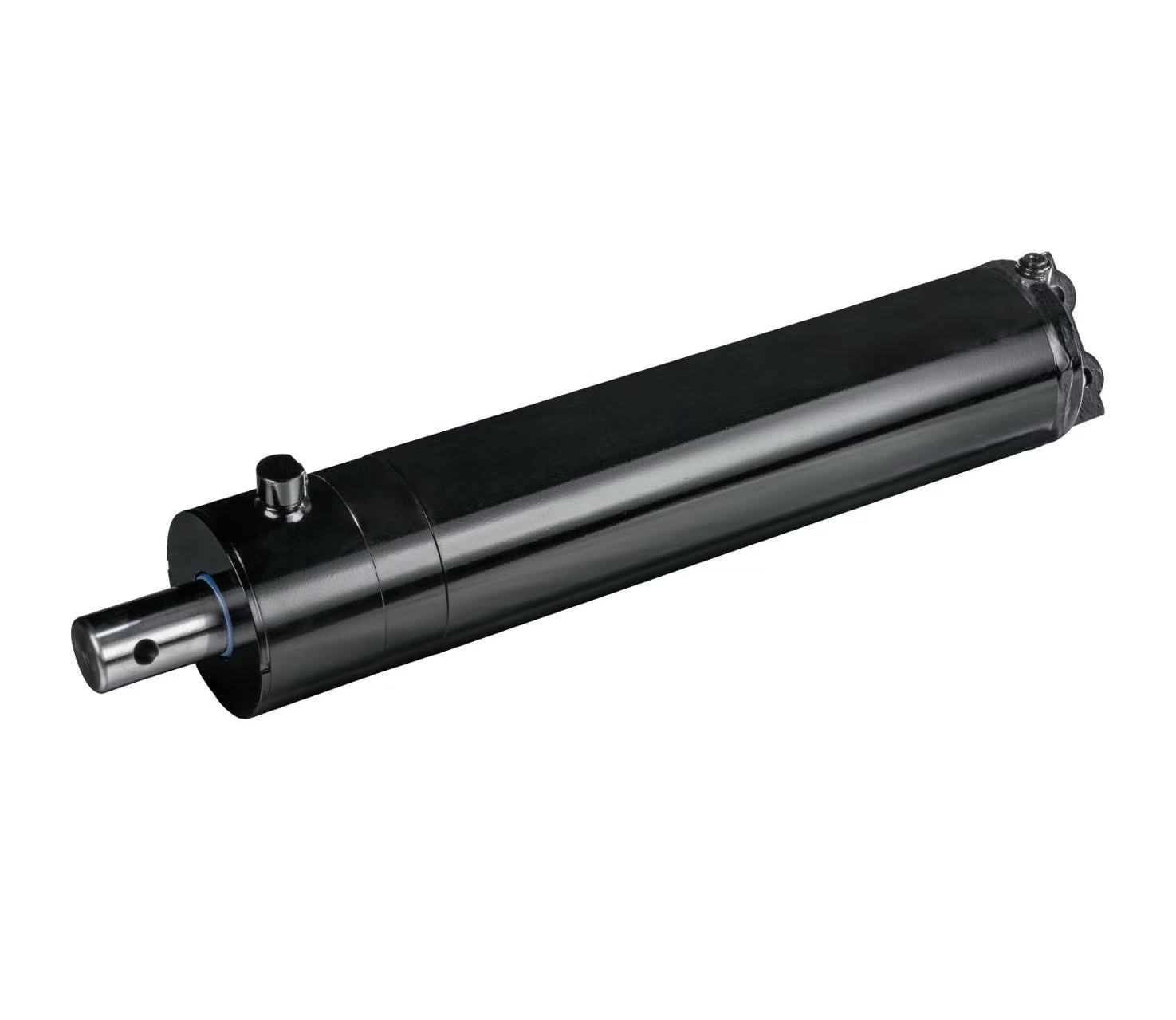
A dump truck telescopic hydraulic cylinder is a multi-stage linear actuator consisting of nested steel tubes that extend sequentially to lift the dump body, achieving a long stroke from a compact retracted length, essential for dumping heavy materials efficiently.
How do Dump Truck Cylinders Work?
If you have ever watched a dump truck raise its bed to unload gravel or sand, you have seen a telescopic hydraulic cylinder in action. Unlike standard hydraulic cylinders that have a single piston rod, dump truck cylinders use a multi-stage telescopic design.
The Multi-Stage Telescopic Design
A dump truck hydraulic cylinder contains multiple nested steel tubes called stages, typically 3 or 4 stages. The largest diameter stage is at the base, and the smallest stage connects to the dump body. When fully retracted, all stages collapse inside each other, keeping the cylinder short enough to fit under the truck chassis. When extended, the stages slide out one after another, reaching up to four or five times the retracted length.
Sequential Extension in Action
Here is how the lifting process works step by step. When the hydraulic pump sends pressurized oil into the cylinder base, the oil acts on the largest piston area first—the first stage. This stage begins to move outward. Because its surface area is the largest, it generates maximum force exactly when the load is heaviest at the start of the lift.
Once the first stage reaches the end of its stroke, an internal mechanical stop blocks further movement, and the oil pressure redirects to the next stage. Stage two begins extending, followed by stage three, then stage four. This process continues until all stages are fully extended, raising the dump bed to its maximum angle.
The retraction process works in reverse. For single-acting cylinders, the most common type in dump trucks, gravity pulls the dump bed back down, pushing oil out of the cylinder and back to the tank. The smallest stage collapses first, followed by progressively larger stages.
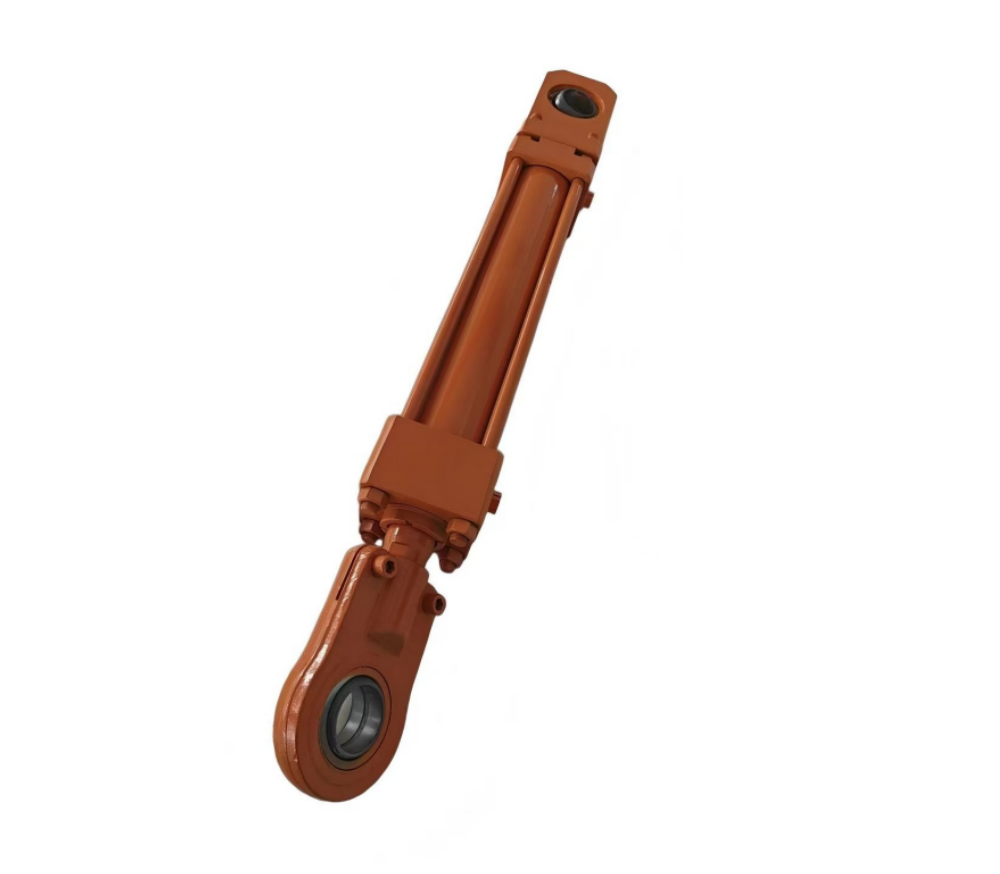
HUTCHIN is a specialized manufacturer of custom hydraulic cylinders in China, and also manufactures standard hydraulic cylinders like tie rod cylinders, welded cylinders, and telescopic cylinders, serving dump truck applications among other industries.
The Hoist Mechanism
The hydraulic hoist system on a dump truck is more than just the cylinder—it is an integrated system that works together to lift heavy loads safely and efficiently.
Front-Mount vs. Underbody Mount
The most common configuration for dump trucks is the front-mount hoist. In this design, the telescopic cylinder is mounted at the front of the dump body, near the cab. When the cylinder extends, it pushes the dump body upward from the front, causing it to pivot at the rear hinge. Front-mount cylinders apply less lifting force for the same load because they take advantage of the lever principle, reducing structural stress on the truck frame.
Underbody hoists mount the cylinder beneath the dump body, pushing upward from underneath. These are more common on smaller trucks and trailers where under-chassis space is available.
The Full Hoist System
A complete hydraulic hoist system includes several components working together:
The hydraulic pump draws oil from the reservoir and delivers it under pressure to the cylinder. The power take-off (PTO) engages the pump, requiring sufficient engine speed to generate adequate flow. The control valve directs oil to either extend or retract the cylinder, and the reservoir stores hydraulic fluid when the cylinder is retracted.
When the driver engages the PTO and operates the control valve, pressurized oil flows to the cylinder. The cylinder extends, lifting the dump body. Once the load is dumped, the driver shifts the valve to allow oil to return to the reservoir, and gravity lowers the bed.
HUTCHIN has been designing and manufacturing hydraulic cylinders for over 20 years, serving global customers in construction machinery, agricultural machinery, and municipal machinery. Their cylinders are engineered to withstand extreme work environments.
Why Choose a Dump Truck Telescopic Hydraulic Cylinder?
Telescopic cylinders are the standard choice for dump trucks for several compelling reasons.
Space Efficiency
A dump truck has limited space under the chassis. A single-stage cylinder long enough to raise the dump body fully would be impossible to mount. Telescopic cylinders solve this problem by offering a long stroke from a short retracted length. The collapsed length of typical telescopic cylinders varies between 20% to 40% of their extended length. This means a cylinder that extends to 100 inches can be as short as 20 to 40 inches when fully retracted.
High Dump Angles for Complete Unloading
To ensure materials like wet clay, gravel, or sand slide out completely, you need a steep dump angle. A dump truck needs a sufficiently steep dumping angle to ensure materials slide out completely. Telescopic cylinders achieve higher angles than other designs because of their long extension capability. This means fewer manual interventions to clear stuck material, improving safety and productivity on the job site.
Smooth, Controlled Lifting
Because the stages extend sequentially, the lift starts slowly with maximum force when the load is heaviest, then speeds up as the load shifts backward during dumping. This progressive action provides a smooth, controlled lift rather than a sudden jerky motion.
Comparing 3-Stage vs. 4-Stage Cylinders
Both 3-stage and 4-stage telescopic cylinders are common in dump trucks, but they suit different applications. Here is a comparison:
Feature | 3-Stage Cylinder | 4-Stage Cylinder |
Number of stages | 3 nested tubes | 4 nested tubes |
Lift height | Moderate | Maximum |
Best for | Standard dump bodies | Long dump bodies |
Cost | Lower | Higher |
Many contractors choose 4-stage cylinder specifically because the added extension makes for a smoother, more complete unload, especially when dealing with sticky or heavy material.
Key Features of a High-Quality Dump Truck Telescopic Hydraulic Cylinder
Not all telescopic cylinders are built the same. When evaluating a cylinder for your dump truck, look for these quality indicators.
Bore Size and Lifting Capacity
The bore size directly determines how much weight the cylinder can lift. A larger bore provides more lifting power, which is essential if your truck hauls heavy loads. Dump truck cylinders typically operate at pressures between 160 and 250 bar (2,300 to 3,600 psi). Verify that your truck's hydraulic system can deliver the required pressure and that the cylinder is rated for your system's maximum pressure.
Chrome Plating and Surface Treatment
The piston rod is the most exposed part of the cylinder and must resist corrosion, scratching, and wear. Quality cylinders use chrome-plated rods. Chrome plating provides a hard, smooth surface that protects seals and prevents rust. When the chrome wears through or gets deeply scratched, the cylinder will start leaking and needs repair.
Seal Quality
Seals are often the first component to fail in a hydraulic cylinder, especially in hot, dusty environments. Look for cylinders equipped with high-quality seals. Quality seals prevent leakage and keep contaminants out of the system.
Dump truck telescopic hydraulic cylinders use multi-stage nested tubes to extend sequentially, achieving long strokes from compact retracted lengths. When selecting one, match stroke length to your truck bed, verify bore size for your load capacity, and confirm pressure ratings. Regular maintenance—checking for leaks, cleaning rods, and monitoring fluid cleanliness—prevents costly failures.