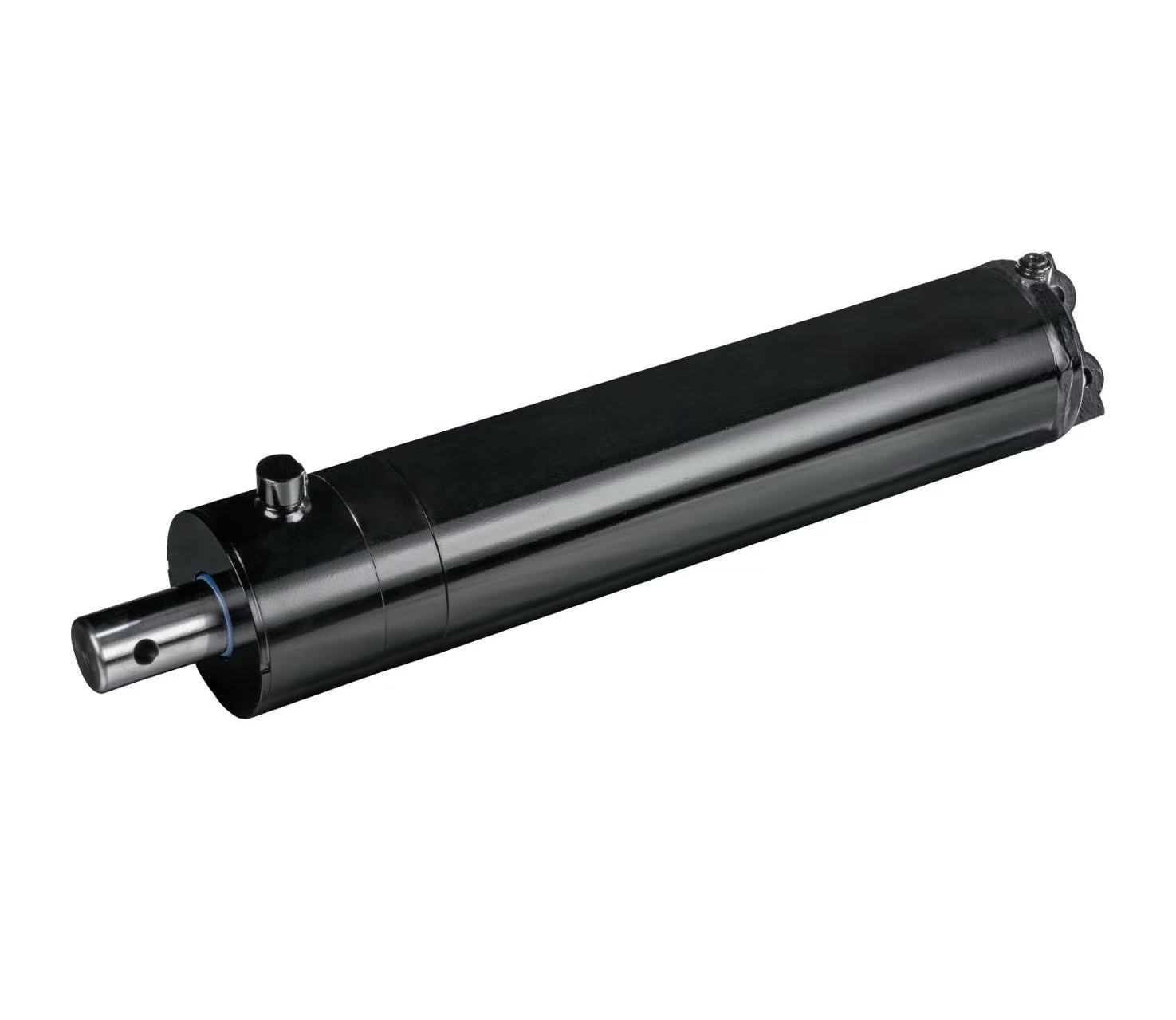
An inverted telescopic hydraulic cylinder is a multi-stage linear actuator designed to produce a long lifting stroke from a comparatively compact retracted length. It is most commonly associated with front-end tipping systems used on dump trucks, dump trailers, and other vehicles where the body must rise to a steep unloading angle.
Unlike a conventional single-stage cylinder, a telescopic design contains several tubular sections nested inside one another. These sections extend sequentially, allowing the cylinder to provide considerably more travel than its closed length would otherwise permit.
The term "inverted" mainly refers to the cylinder's mounting arrangement in a front-end tipping system. A typical inverted design uses trunnions around the upper cylinder body and a lower eye or bearing connection, allowing the complete cylinder to pivot as the dump body rises.
How Is an Inverted Telescopic Cylinder Constructed?
An inverted cylinder normally includes an outer body, several nested sleeves, internal stops, guide bearings, seals, wipers, hydraulic ports, and mounting components.
The largest section forms the main cylinder body. Smaller stages are positioned inside it in descending order of diameter. Each stage must remain correctly guided because poor alignment can increase friction, damage sealing surfaces, and reduce operating stability.
For front-end dump-body applications, HUTCHIN's inverted telescopic cylinder combines a multi-stage structure with a compact closed length. Its WT series consists of single-acting lifting cylinders mainly intended for dump truck hydraulic systems.
How Does an Inverted Telescopic Cylinder Work?
Most inverted telescopic cylinders used in dump-body lifting systems are single-acting. Hydraulic oil enters the cylinder under pressure and creates force against the effective area of the first moving stage.
The largest moving stage usually extends first. Once that section reaches its internal stop, the next smaller stage starts to extend. This sequence continues until the final stage reaches the required position.
During retraction, the sequence normally reverses. The smallest stage returns first, followed by each progressively larger section. Parker’s mobile cylinder guidance confirms that telescopic cylinders generally extend from the largest stage to the smallest and retract from the smallest stage to the largest.
As the cylinder changes from a large stage to a smaller one, the effective hydraulic area decreases. At the same pressure, the available lifting force becomes lower, while movement speed may increase if the oil flow remains constant.
This changing force profile is important during equipment design. The cylinder must provide sufficient lifting force at every part of the cycle rather than only during the first stage.
Why Are Inverted Cylinders Used on Dump Trucks?
The main benefit is the relationship between stroke and installation space. A long single-stage cylinder may be impossible to fit between the vehicle chassis and the lowered dump body. A telescopic cylinder divides the required stroke among several nested sections.
This provides several practical advantages:
Long extension from a short retracted package;
Direct front-end lifting without a complicated linkage;
High dumping angles for more complete material discharge;
Multiple stage and capacity options;
Compatibility with different body lengths and chassis layouts.
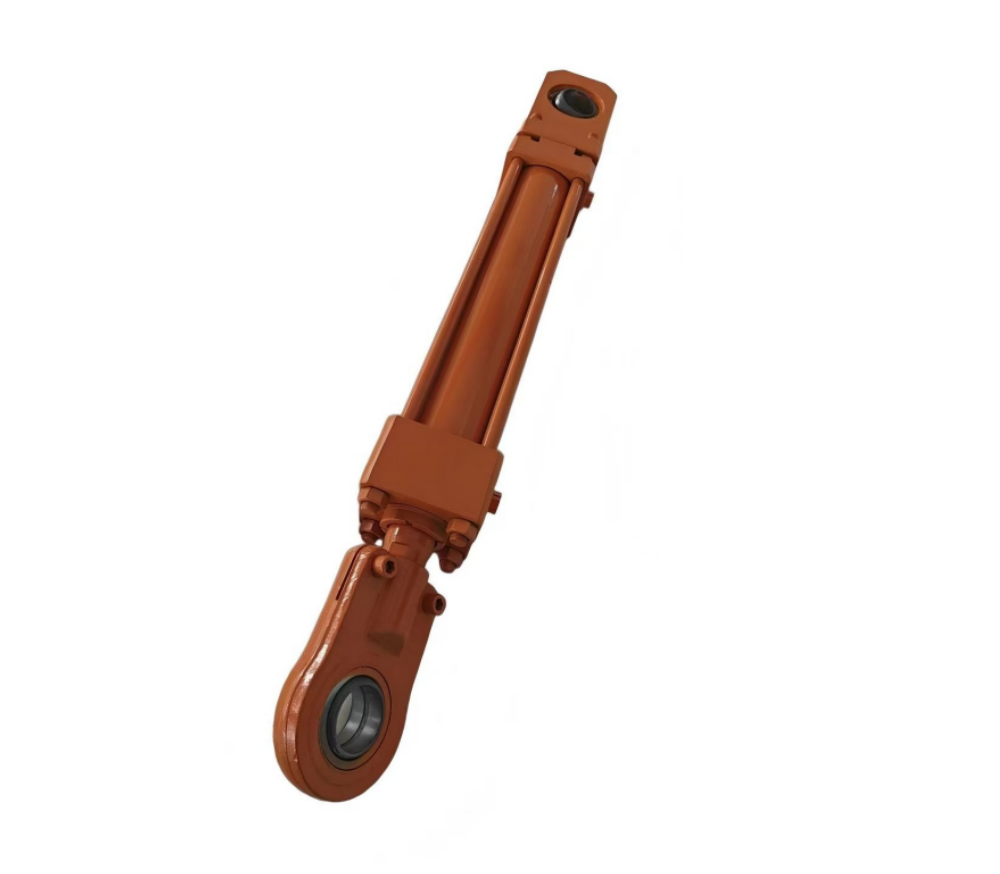
Equipment with a different mounting arrangement may require custom telescopic hydraulic cylinders instead of a standard inverted model. HUTCHIN’s telescopic range includes single-acting, double-acting, big-bore, and multi-stage configurations, with customized solutions available when standard dimensions cannot match the equipment.
Inverted vs. Conventional Telescopic Cylinders
An inverted cylinder does not operate according to a different hydraulic principle. The main distinction is its physical orientation and mounting relationship with the tipping body.
Inverted front-end cylinders are generally suitable when:
The cylinder must be mounted near the front of the body;
The available closed length is limited;
A long lifting stroke is required;
The cylinder needs to pivot as the body rises;
Direct lifting is preferred over an underbody linkage.
A conventional pin-to-pin, trunnion-mounted, or underbody telescopic cylinder may be better for another vehicle layout. The correct configuration depends on chassis clearance, body shape, hinge position, center of gravity, and required tipping angle.
How to Select the Correct Inverted Cylinder
Cylinder selection should begin with the machine geometry rather than a product model number. Buyers should provide:
Dump-body weight;
Maximum payload;
Body length and rear hinge position;
Required tipping angle;
Initial and final cylinder angles;
Available closed length;
Required extended length;
Hydraulic working pressure;
Mounting pin and trunnion dimensions;
Port size and orientation.
The beginning of the lifting cycle is often the most demanding because the body is nearly horizontal and the cylinder may operate at a relatively shallow mechanical angle. A cylinder that appears adequate from its nominal tonnage may still struggle if the mounting geometry reduces its effective lifting moment.
When a standard model cannot satisfy the required load, stroke, pressure, or mounting dimensions, working with a custom hydraulic cylinder manufacturer allows the cylinder to be designed around the actual application. HUTCHIN lists options including customized bore and stroke, integrated valves, cushioning, position sensors, and alternative rod materials.
FAQs
Is an inverted telescopic cylinder always single-acting?
No. Single-acting cylinders are common because the weight of the dump body can provide the retracting force. Double-acting telescopic cylinders can be used when powered retraction or more controlled movement is required.
How many stages should an inverted cylinder have?
The number of stages depends mainly on the required stroke and available closed length. More stages can create a longer extension from a compact package, but they also add sealing surfaces and structural complexity.
Can an inverted cylinder replace any dump trailer cylinder?
No. Stroke, closed length, mounting positions, lifting force, pressure rating, stage diameter, port orientation, and pin dimensions must all be checked.
Conclusion
An inverted telescopic hydraulic cylinder provides the long stroke and compact installation needed for front-end dump truck and trailer lifting systems. Its performance depends on more than rated capacity: stage sequence, body geometry, operating pressure, mounting alignment, and load position all affect the final result.
For OEM or replacement projects, a complete dimensional drawing and accurate operating data are the most reliable basis for selecting a standard cylinder or developing a customized solution.